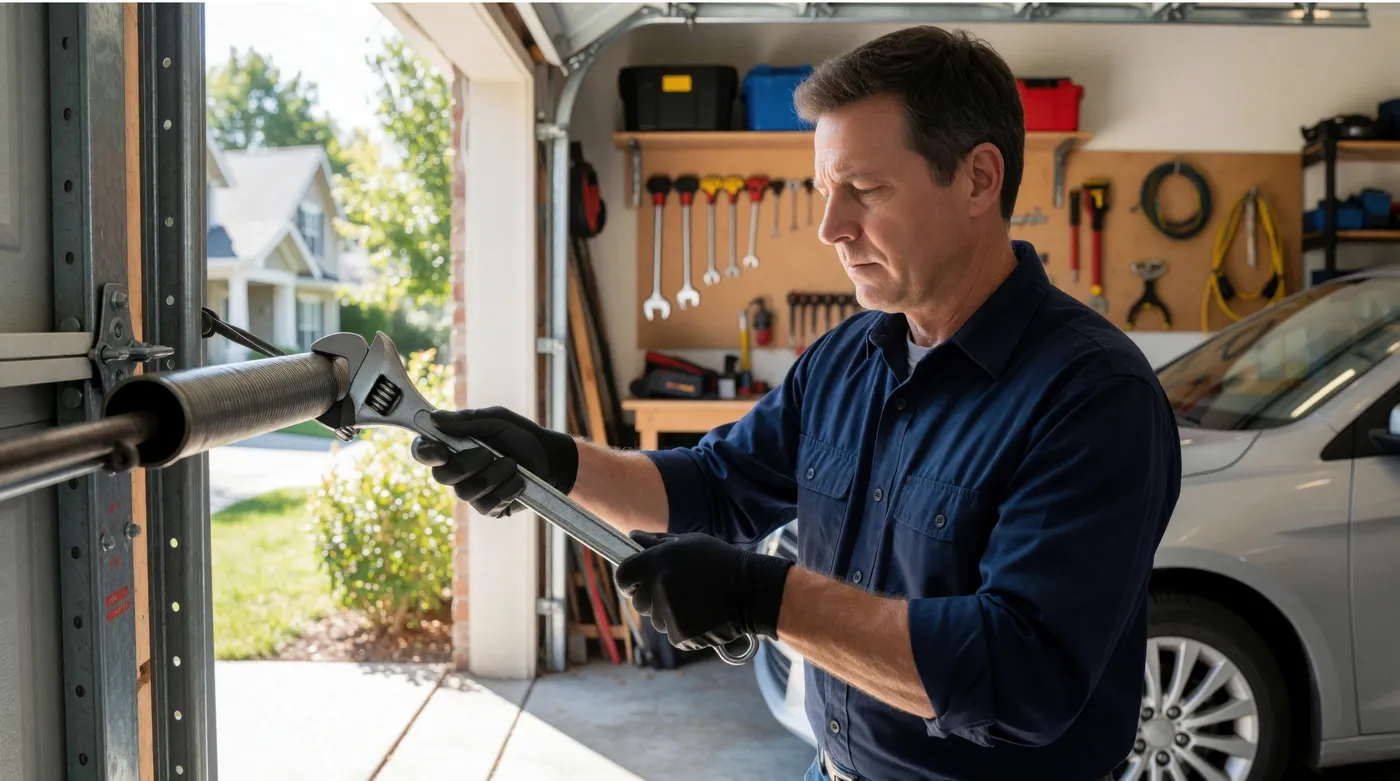
Torsion vs. extension springs
Most homes around Columbus built in the last few decades use torsion springs, mounted on a steel shaft above the door. Older homes and some single-car garages use extension springs that stretch along the horizontal tracks on each side. Both store enough energy to lift a door weighing well over a hundred pounds, which is exactly why they're dangerous to adjust without the right tools and training.
Why springs break
Every open-and-close cycle fatigues the steel. Standard springs are commonly rated for around 10,000 cycles, which for a family using the garage as its main entrance can mean several years, or fewer. Rust, Ohio's cold winters and a door that's out of balance all shorten that life. When one spring breaks, the other has been through the same number of cycles, which is why replacing them as a pair is usually the better value.
Getting the size right matters
A spring is matched to your door's weight and height by wire size, inside diameter and length. The wrong spring leaves the door drifting open or crashing shut and strains the opener. A proper repair measures and weighs the door, fits the correct springs, then balances it so it stays put when lifted halfway by hand.
What affects the price
Every door is different, so the technician confirms the exact price on site before any work starts. The main factors are:
- Torsion or extension system
- One spring or a matched pair
- Spring size and cycle rating
- Whether cables or bearings also need replacing